Quick Summary
How much weight a dumpster can take depends on its size and what you are throwing away. Our dumpsters in Bay County are priced per dump, and each size comes with a large weight allowance. Most cleanouts never come close to it. Going over is uncommon, but it does add an overage charge, and it almost always happens with the same few materials, like concrete, dirt and shingles. Here is how to tell whether your project is a weight job or a space job, and how to plan for it.
How weight works on our dumpsters
We price every rental per dump. A 10-yard is $400, a 15-yard is $450 and a 20-yard is $500, and each one comes with a weight allowance that covers a normal load for its size. If the load comes in over the allowance, an overage charge is added. That is the whole system.
For most of our customers, weight never comes up. A garage cleanout, a move-out or a houseful of old furniture fills the container with bulk long before it gets heavy. The jobs where weight matters are the ones with dense material, and those are easy to spot ahead of time.
Space jobs and weight jobs
It helps to think of every project as one or the other. A space job is mostly light, bulky material. It runs out of room first. A weight job is mostly dense material. It reaches the weight allowance while there is still empty space in the container.
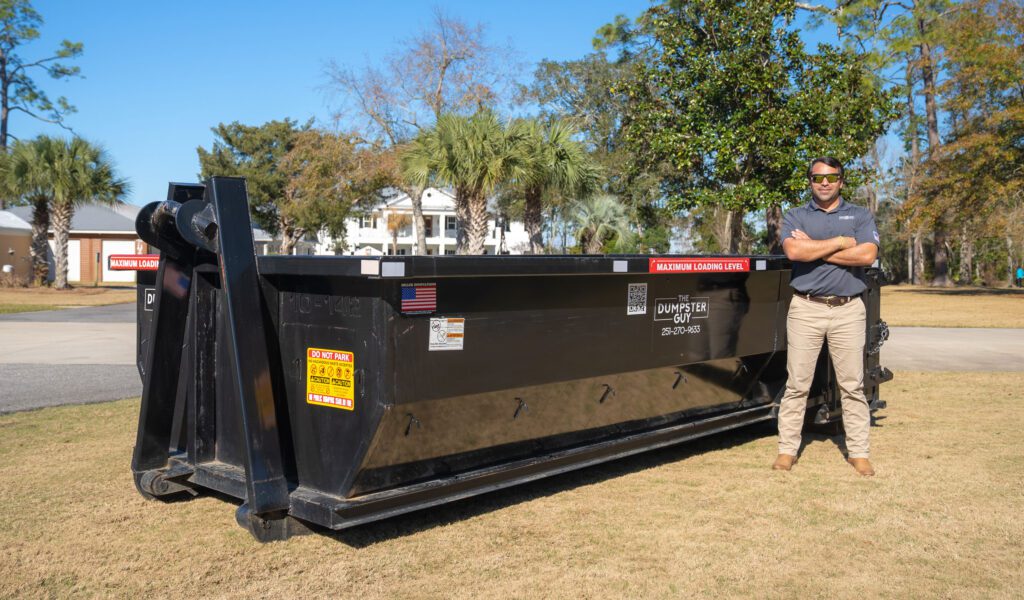
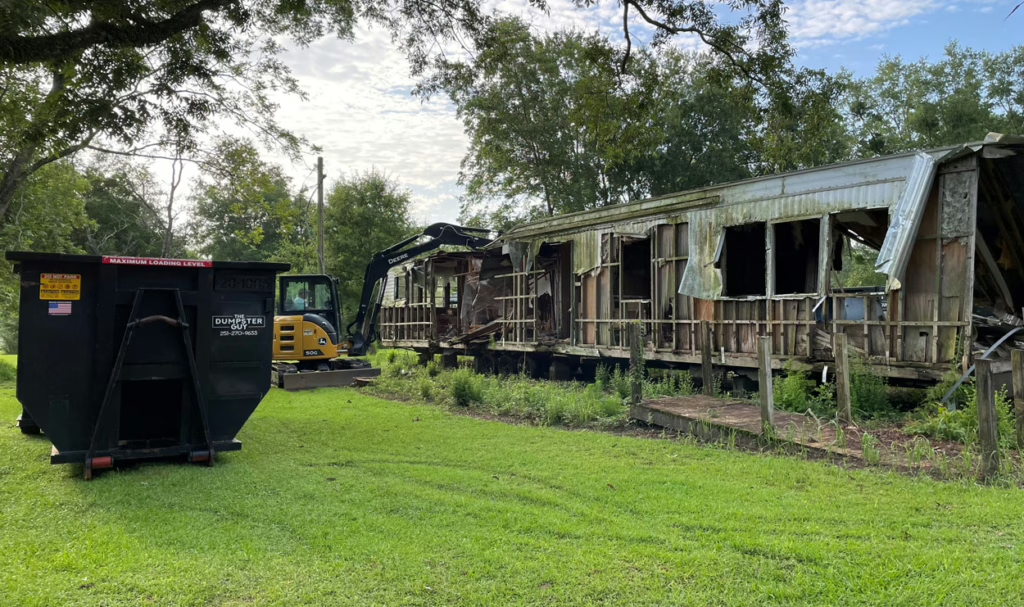
Getting this right is what keeps a rental on budget. On a space job, a bigger container is usually the better buy. On a weight job, a bigger container does not help, because the extra room only invites more heavy material in. Our dumpster sizes page makes the same point. Heavy items like concrete, soil and roofing shingles may call for a smaller dumpster, while furniture and yard waste can fill a larger one without coming near the limit.
Debris that gets heavy fast
These are the materials that turn a load into a weight job. The figures are typical industry weights, so treat them as a rough guide.
- Concrete, brick and block, at well over a ton per cubic yard
- Dirt, sand and sod, which get heavier still after a Panhandle rain
- Asphalt shingles, at roughly 65 to 80 pounds a bundle
- Tile, mortar and plaster from a bathroom or kitchen
- Wet drywall and soaked carpet, which can weigh far more than the same material dry
Debris that stays light
Furniture, mattresses, cardboard, clothing, toys, household clutter, cabinets, lumber scraps and most dry yard waste are all bulky and light. One cubic yard is about the size of a washing machine or a king-size mattress, so it takes a lot of this material to fill a container and much more to reach its weight allowance.
If your project is mostly this kind of debris, pick your size by volume. Our 10-yard holds about 4 pickup truck loads, the 15-yard about 6 and the 20-yard about 8.
Planning a heavy load
Tell us what is going in when you book. If it is a roof, a patio slab, a load of fill dirt or a tiled bathroom, we will help you match the container to the weight instead of the space. That conversation is the simplest way to avoid an overage charge.
When you load, spread heavy material across the floor of the container rather than piling it at one end, and keep everything level with the top rim. Our guide on how to load a dumpster the right way walks through it step by step. If a project mixes heavy and light debris, put the heavy material in first so it is spread across the floor and the light material sits on top.
Get the right dumpster in Bay County
You can compare all three containers and our per-dump prices before you book, and our dumpster rental FAQs answer the common questions about fees and loading. We serve homeowners and contractors across the county, and our dumpster rentals in Panama City page covers the city. When you are ready, order online or call us at 850-777-3774. Tell us what you are clearing out and we will take care of the rest.
Key Takeaways
- Our dumpsters are priced per dump, and each size includes a large weight allowance.
- Going over the allowance is uncommon, but it adds an overage charge.
- Concrete, dirt, shingles, tile and wet drywall are what make a load heavy.
- Furniture, boxes and household clutter fill the space long before they reach the weight allowance.
- Tell us about heavy material when you book so the container matches the weight.
Frequently Asked Questions
How much weight can you put in a dumpster?
Each of our sizes comes with a weight allowance that covers a normal load for that size. Most cleanouts never come close to it. Heavy materials like concrete, dirt and shingles are the ones that can go over.
What happens if my dumpster is over the weight limit?
An overage charge is added to the per-dump price. It is uncommon, and telling us about heavy material when you book is the best way to avoid it.
Is a bigger dumpster better for heavy debris?
Usually not. Heavy material reaches the weight allowance before it fills the space, so a smaller container is often the better match for concrete, soil or shingles.
Do you charge by the ton?
No. We price per dump, with a weight allowance included in each size.
How heavy are roofing shingles?
A bundle of asphalt shingles typically weighs about 65 to 80 pounds, so a full roof tear-off adds up quickly. Let us know it is a roofing job when you book.